
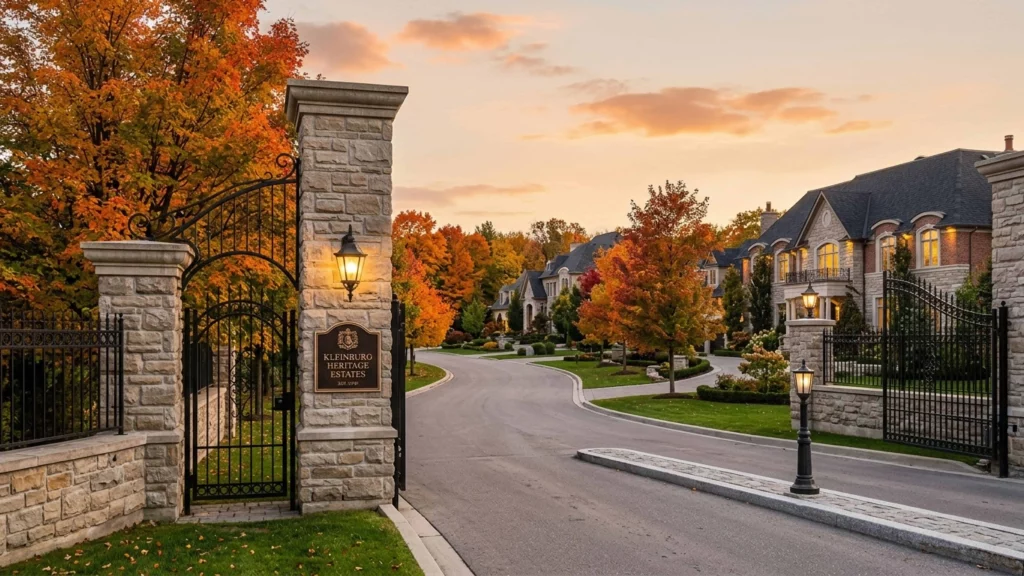
Oshawa’s best neighbourhoods include Taunton, Kedron, Samac, McLaughlin, and Pinecrest, each offering distinct housing types, price ranges, and community profiles. Families, first-time buyers, and investors all find different value propositions depending on which pocket of Oshawa they focus on.
Oshawa Is Not the Market It Was Five Years Ago
The perception of Oshawa as a secondary market has been quietly eroding. Infrastructure investment, post-secondary institution growth through Ontario Tech University and Durham College, and sustained in-migration from higher-priced GTA municipalities have repositioned Oshawa as a genuine destination rather than a last resort.
Buyers who approached Oshawa purely on price five years ago are now sitting on meaningful equity. Buyers approaching it today are making a more deliberate lifestyle and investment decision, with a clearer understanding of what each neighbourhood actually delivers.
For agents building a Durham Region practice, understanding how Oshawa’s neighbourhood dynamics connect to the broader corridor matters significantly. The real estate brokerage Markham tier of the market often overlaps with buyer paths that include Oshawa comparisons, particularly among buyers who’ve been priced out of western York Region.
Oshawa’s Best Neighbourhoods: An Honest Assessment
Taunton
Taunton is Oshawa’s most consistently recommended neighbourhood for families. The area sits in the city’s north end and features newer subdivision development, strong school infrastructure, and proximity to big-box retail and recreational amenities along Taunton Road.
The housing stock is predominantly detached single-family homes built since the early 2000s, with townhome pockets offering accessible entry points for first-time buyers. Lot sizes in Taunton are reasonable by suburban standards, and the streetscape quality is consistent.
What distinguishes Taunton is the density of family-oriented infrastructure within a short radius. Parks, arenas, splash pads, and trail connections to the Harmony Creek greenway make the neighbourhood genuinely livable rather than just affordable. Buyers with school-age children consistently rate Taunton at the top of their Oshawa shortlist.
Price-wise, Taunton sits at the upper end of the Oshawa market. Detached homes in move-in condition transact above the city average, reflecting the consistent demand from families who could afford elsewhere but choose Taunton for its community character.
Kedron
Kedron is newer and still developing, which creates both opportunity and uncertainty. The neighbourhood occupies Oshawa’s northwestern edge and is part of the city’s secondary plan for long-term residential growth. Buyers entering Kedron now are purchasing into a neighbourhood that will look different in ten years.
For buyers with an investment mindset, that trajectory is attractive. Infrastructure that does not yet exist, including planned road improvements and community services, will eventually support stronger pricing. Buyers who understand how secondary plan timelines translate into appreciation cycles can position themselves well in Kedron.
The buyer profile here skews toward younger households and first-time purchasers who want new construction quality without the premium that established Taunton commands. Builders are active in Kedron, which means buyers have pre-construction options alongside resale inventory.
Samac
Samac sits in Oshawa’s north-central area and offers a balanced profile that appeals to a wide range of buyers. The neighbourhood has a mix of housing types, including detached homes, semis, and townhomes, across a price range that accommodates different budget thresholds.
The proximity to Ontario Tech University creates a specific market dynamic. Investor buyers targeting student rental income find Samac appealing. Owner-occupiers who want established tree canopy, mature streetscapes, and proximity to the university’s cultural programming also gravitate here.
Samac’s school catchment includes both elementary and secondary options, and the neighbourhood’s internal walkability is above average for Oshawa standards. Residents can access everyday retail and transit without relying entirely on a vehicle, which is a genuine differentiator in a car-dependent city.
McLaughlin
McLaughlin is one of Oshawa’s older established neighbourhoods, named after R.S. McLaughlin, whose legacy is woven into the city’s identity through the McLaughlin Bay Wildlife Reserve and Parkwood Estate. The neighbourhood carries a distinct character that newer developments cannot replicate.
Housing stock in McLaughlin ranges from well-maintained post-war bungalows to larger two-storey homes on generously sized lots. Buyers interested in character homes, mature trees, and a neighbourhood with genuine history find McLaughlin compelling in ways that newer subdivisions simply are not.
Renovation-aware buyers find particularly strong opportunity here. The gap between a dated McLaughlin property and a renovated one is meaningful, and the neighbourhood’s underlying lot value supports investment in updates. Agents working buyer clients with a renovation appetite should include McLaughlin in their shortlist conversations.
Pinecrest
Pinecrest offers Oshawa’s best balance between accessibility and community quality. Located in the city’s west end, the neighbourhood benefits from proximity to Highway 401 interchange access and is well-served by Durham Region Transit.
The housing mix includes detached homes, townhomes, and some semi-detached inventory across a price range that remains more accessible than Taunton. Buyers who need commuter connectivity, particularly those with employment destinations in Ajax, Pickering, or Scarborough, find Pinecrest’s location geometry highly practical.
Pinecrest also has one of Oshawa’s more active recreational communities. Local parks, sports fields, and community programs serve a predominantly family-oriented resident base, giving the neighbourhood a social cohesion that complements its practical location advantages.
Grow Your Real Estate Career at RE/MAX Millennium
Get hands-on training, full marketing and admin support, and access to a powerhouse network across the GTA.
What Buyers Are Actually Comparing When They Research Oshawa
Understanding Oshawa’s neighbourhood landscape requires understanding what buyers are simultaneously evaluating. The comparison set is consistently predictable:
Whitby sits immediately to the west and offers a similar family-oriented suburban character at prices that have historically run modestly higher than Oshawa. Buyers choosing between the two often resolve the comparison based on specific school catchments and commute routing rather than on broad neighbourhood quality.
Ajax competes directly for the value-conscious buyer with transit-oriented priorities. The Ajax GO Station access to Union Station creates a specific buyer segment that weights transit proximity heavily, which narrows the comparison to specific Oshawa pockets near Durham Region Transit corridors.
Brampton operates in a different geographic direction but attracts buyers who are performing broad GTA affordability searches. Buyers researching safe and established neighbourhoods in Brampton sometimes find their way to Oshawa comparisons through price-per-square-foot research rather than geographic preference.
Mississauga sits at a different price tier entirely for most buyers, but the comparison occasionally appears among buyers relocating from outside the region who are evaluating broad GTA options. Content connecting Mississauga neighbourhood profiles to Oshawa’s market reality helps buyers contextualize the value differential.
Investment Considerations Buyers Overlook in Oshawa
The rental market in Oshawa is more sophisticated than it appears from the outside. Ontario Tech University and Durham College together enroll tens of thousands of students, the majority of whom require off-campus housing. That demand base creates a durable rental market that is not entirely dependent on broader economic conditions.
Samac and certain McLaughlin pockets absorb the most student rental demand. Investors who understand unit configuration preferences among student tenants, specifically the per-bedroom pricing model versus whole-unit leasing, can optimize acquisition strategy accordingly.
The longer-term appreciation story in Oshawa connects to infrastructure investment patterns across Durham Region. Highway 407 ETR extension activity, GO expansion commitments, and planned transit intensification corridors all feed into the case for Oshawa’s sustained demand profile.
Buyers approaching Oshawa as an investment should track Toronto real estate trends closely because the pricing pressure that moves buyers eastward from the core is the primary engine of Oshawa demand. When Toronto core absorption tightens, Oshawa benefits within a relatively short lag period.
The Agent Dimension: Building a Durham Region Practice
Oshawa is an agent market where local knowledge compounds quickly. Buyers who are new to the city rely heavily on agent guidance during neighbourhood selection. Agents who can explain the Taunton versus Kedron tradeoff, or the McLaughlin renovation opportunity versus the Pinecrest commuter positioning, in practical terms build trust faster than those offering generic neighbourhood summaries.
The challenge is that Oshawa requires genuine investment in local knowledge. An agent transplanting their practice from Vaughan or Toronto’s affluent neighbourhoods into Durham Region cannot import that local specificity. It has to be built through market immersion.
The brokerage infrastructure behind an agent shapes how quickly that local competence develops. Training programs that include market-specific orientation, access to historical MLS transaction data, and mentorship from established Durham Region producers all accelerate the curve. Agents evaluating where to build a Durham or York Region practice should weight those structural inputs as seriously as commission split discussions.
A top real estate agent brokerage operating in this corridor will provide the brand recognition and administrative infrastructure that lets agents focus on market knowledge rather than operational overhead.
Frequently Asked Questions
Taunton consistently ranks highest for families due to its newer housing stock, strong school catchments, and family-oriented recreational infrastructure. Samac and Pinecrest are strong secondary options depending on specific priorities.
Oshawa offers a combination of relative affordability within the broader GTA market, strong rental demand driven by post-secondary institutions, and infrastructure investment that supports long-term appreciation. It remains one of the more accessible entry points into the regional ownership market.
Samac and McLaughlin offer the strongest investor profiles: Samac for student rental demand proximity to Ontario Tech University, McLaughlin for renovation-driven value-add opportunity on established lots.
Whitby typically carries a modest price premium over comparable Oshawa neighbourhoods. The comparison often resolves based on specific school catchments, proximity to GO access, and personal community preference rather than broad quality differences.
First-time buyers benefit from understanding that Oshawa’s neighbourhoods are not interchangeable. Price differences between Kedron and Taunton reflect real differences in community maturity, infrastructure, and long-term appreciation dynamics. Choosing based on current price alone without understanding development timelines can create surprises.
Final Perspective
Oshawa rewards buyers who approach it with specificity. The difference between a strong purchase and a mediocre one often comes down to neighbourhood selection within the city rather than the city selection itself. Taunton, Kedron, Samac, McLaughlin, and Pinecrest each serve a distinct buyer type, and the right fit depends on what the buyer is actually optimizing for.
For agents, Oshawa and the broader Durham Region corridor represent a genuine growth opportunity for practitioners willing to invest in local market knowledge. The buyers entering this market need guidance, not just access to listings. Agents who can deliver the former build practices that generate referrals. The brokerage infrastructure that supports that kind of practice development is worth evaluating carefully before committing to a flag.